AI governance has always been about reviewing outputs before anything consequential happens. Agentic AI changes that. These systems don’t just generate content, they take action. They call APIs, execute code, send messages, and interact with software on their own. The human checkpoint that traditional governance relied on is no longer guaranteed.
Most organizations already have AI governance programs in place. The good news is you don’t need to start from scratch. But agentic AI introduces new risks around autonomy, liability, data access, and third-party interactions that existing programs weren’t built to address.
We wrote this white paper to help governance professionals understand what’s new, what’s at stake, and how to extend their programs to cover it.
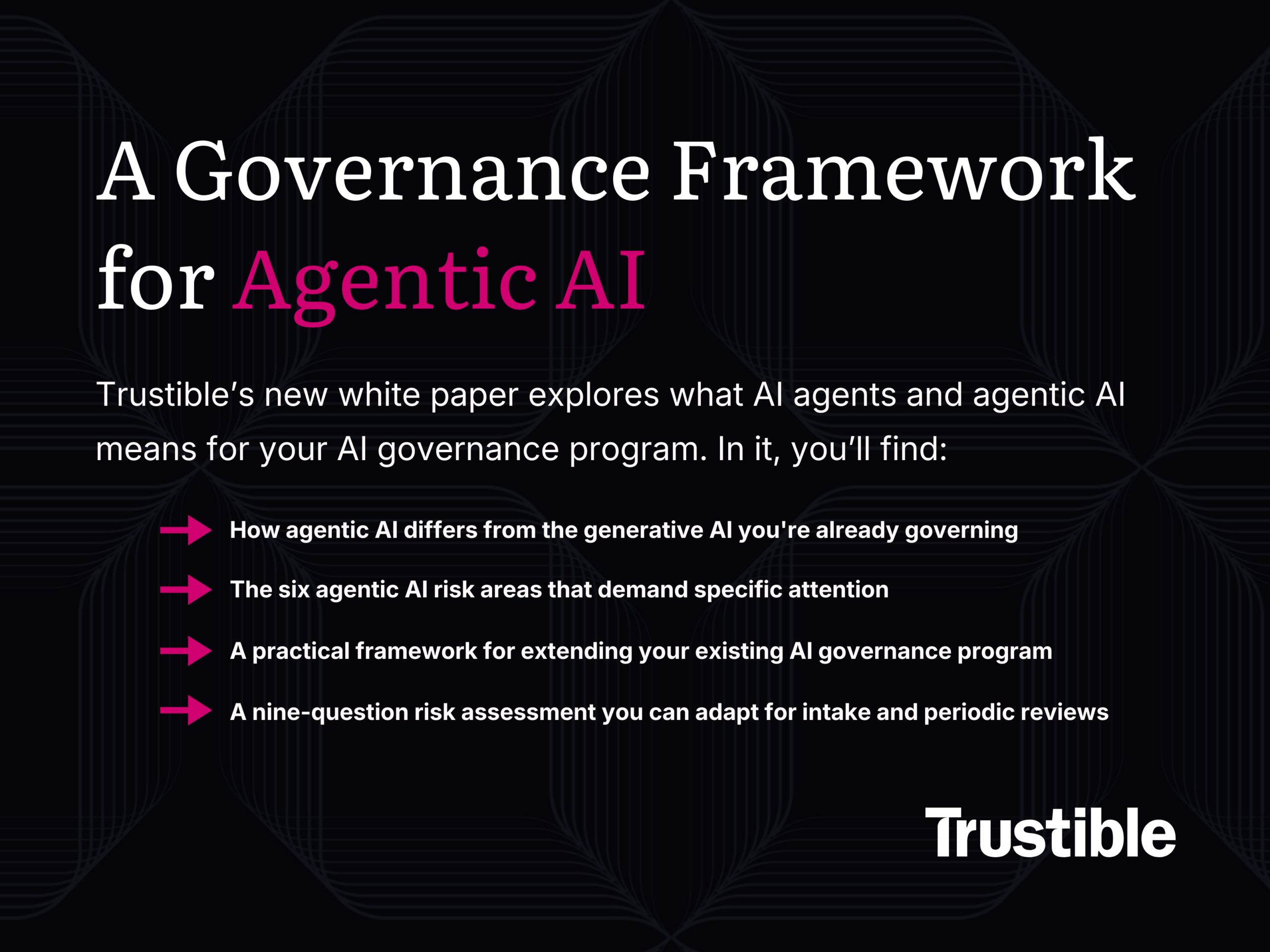
Inside, you’ll find:
- How agentic AI differs from the generative AI you’re already governing
- The six risk areas that demand specific attention
- A practical framework for extending your existing governance program
- A nine-question risk assessment you can adapt for intake and periodic reviews